
What this tool adds
What this tool adds to your bench
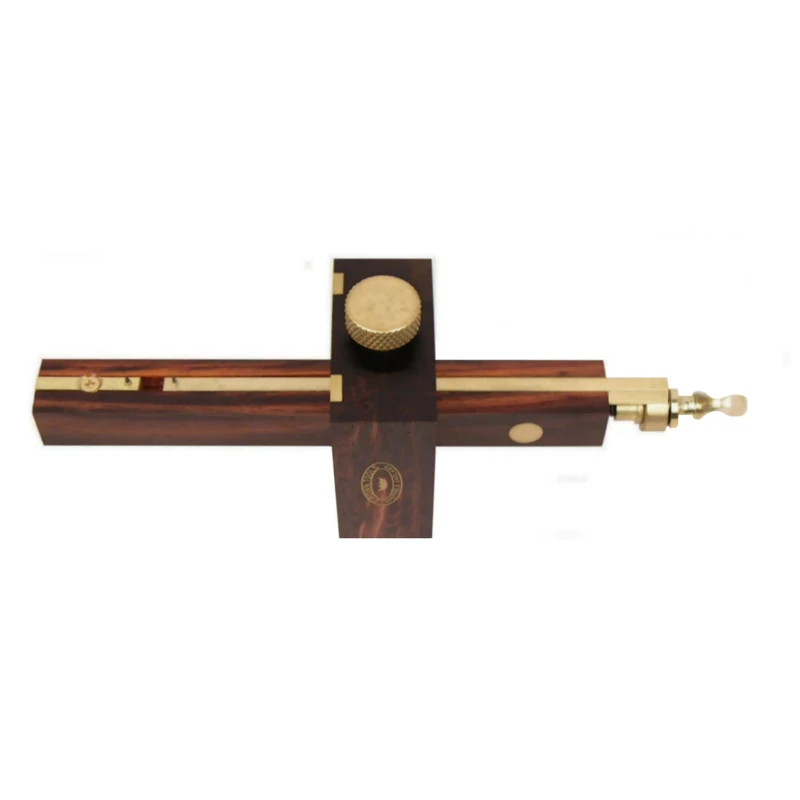
Choose the 154 when you want traditional pin contact for mortise and marking work. Its points register the layout while the head references the board edge. Compare that scoring contact with a wheel gauge or Kebiki blade rather than choosing only from the appearance of the body.
The named feature is the screwslide adjustment. It gives you a screw-controlled setting to compare with another gauge’s sliding or wheel arrangement. A numerical pin-spacing range or verified adjustment tolerance is not established, so check those if your joint depends on a particular setting.
Crown describes rosewood construction with brass fittings and a plated head. The combination separates the wooden body from the metal fittings; it does not make the entire gauge a brass fastener despite unrelated catalogue fields.
Choose this pin-gauge format for the layout method you prefer. The iGaging mortise wheel gauge offers a different cutter arrangement with fine adjustment, and the dual-blade Kakuri scores paired lines with blades. Compare working contact, setting method and required joint width before deciding.
Choose for your actual work
- Compare pin, wheel and blade contacts for your layout method.
- Confirm the needed pin spacing and edge offset.
Fit checks & limits
- Confirm the required pin spacing and working offset before ordering for a dimension-critical joint; a numerical spacing range is not confirmed.
- The selected offer is one gauge. The maker’s wholesale pack of 12 does not describe the consumer contents.
Questions before you choose
What distinguishes it from a wheel gauge?
It uses a traditional pin-gauge format and screwslide adjustment. The iGaging alternative uses a mortise-wheel arrangement.
Can I rely on a specific mortise-width range?
A numerical pin-spacing range is not established by the selected evidence. Confirm the setting your joint requires before buying for a critical width.
Would the dual-blade Kebiki serve a different approach?
It scores paired layout lines with blades. Compare that contact and adjustment method with this pin-gauge format.