
What this tool adds
What this tool adds to your bench
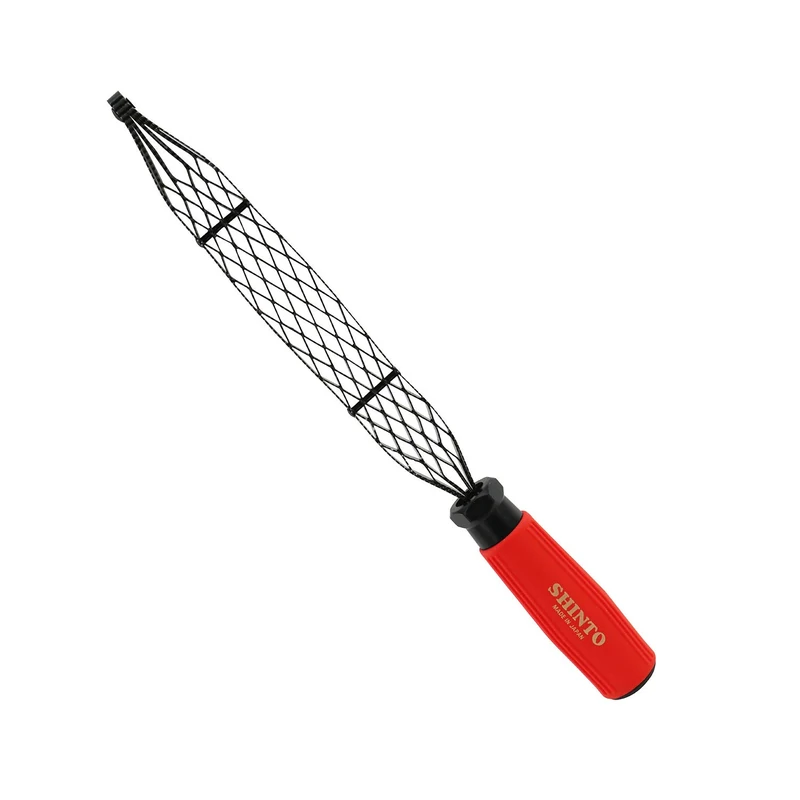
Choose the E1101 when an open-grid rasp with a conventional end grip suits the shape you are working. Its lattice of saw-blade strips provides a different contact from a solid round or half-round cabinet rasp. It is a shaping tool, not a replacement for a handsaw that separates a board.
The selected working length is 200 mm. One side is labelled coarse at 10 teeth per inch and the other medium at 24. Use the coarse face for heavier removal and compare the medium face as the shape approaches the required surface; the labels do not establish a sandpaper-grit equivalent.
The source describes SK steel material with a plastic-and-elastomer grip. The open construction is designed to reduce clogging, but is not a guarantee that no material can lodge between its teeth. The selected description also names plastic, aluminum and brass among its uses; it does not specify every compatible metal grade.
Compare this end-grip form with the SR-30 when raised two-handed control and clearance above a broad face are useful. Choose the Narex three-profile set when round holes, concave surfaces or flat faces call for a particular solid rasp profile. This offer is one complete E1101 rasp.
Choose for your actual work
- Compare the contact shape and grip arrangement with the part you are shaping.
- Use coarse and medium labels as rasp grades, not sandpaper-grit conversions.
Fit checks & limits
- No exact steel grade, universal metal compatibility or clog-free guarantee is established.
- No replacement-blade fit with another Shinto model is confirmed.
Questions before you choose
When would a solid round rasp be a better comparison?
When the opening or curve needs a rounded contact rather than a broad lattice face. Compare the actual profile with the wood being removed.
Will the medium face leave a surface ready for any finish?
It is the finer face of this rasp, not a guaranteed final finish or a sandpaper-grit rating. Compare the remaining surface preparation required by your project.
Why compare the raised two-handled SR-30?
Its handle arrangement provides a different grip and clearance above the work. Choose it when that arrangement suits a broad surface rather than selecting only by cutting length.