
What this tool adds
What this tool adds to your bench
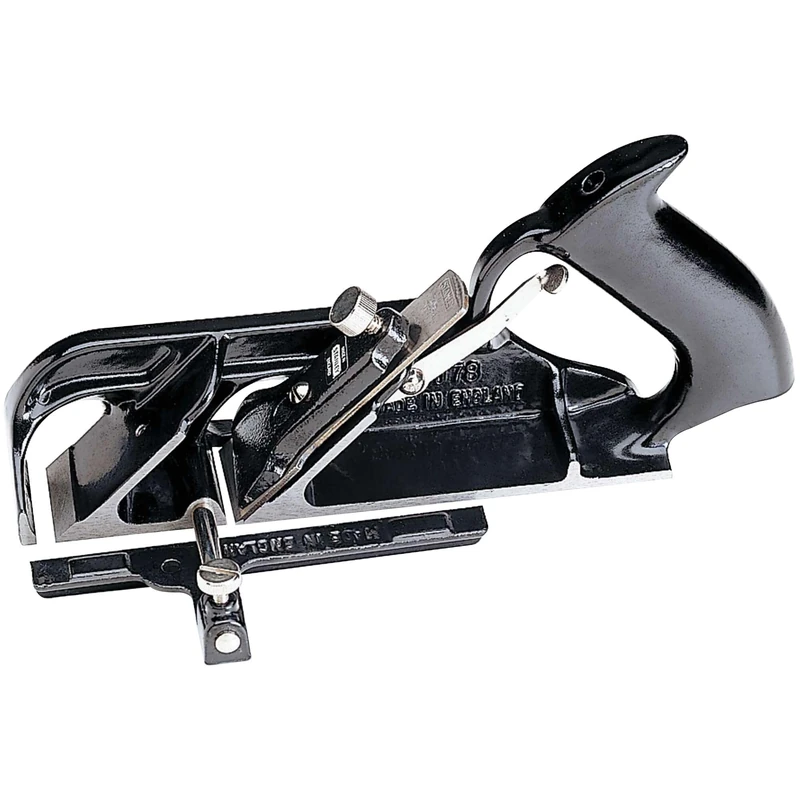
The 12-978 is for forming or refining a rabbet with a guided hand plane. Its cutter has two mounting positions: a rear position for regular work and a forward position for bullnose access near a corner. This is a change in the working arrangement of one complete plane, rather than a set of separate corner and bench planes.
The fence can be fitted on either side, and the described setup includes a removable depth gauge and a spur for work across the grain. Decide whether those guides can register on your actual workpiece before choosing it for a joint. A stopped recess with an obstruction needs room for the tool body as well as the edge; the word bullnose is not a guarantee of access in every corner.
The body and handle are one cast-iron construction, and the cutter is 1-1/2 inches wide. Keep that cutter dimension separate from the depth of a cut. The source also carries a generic 1.5-inch cutting-depth field, which is not used here as a supported depth capacity. Overall-size fields vary, so confirm the footprint if a fitted case or restricted working space matters to the purchase.
Compare the WoodRiver side-rabbet plane when the side of a groove is the surface to refine, and the No. 91 shoulder plane when contact against a shoulder is the main concern. For a replacement cutter, Stanley’s archived maker chart identifies reference 12-333 for model 12-978. Use that as a model-specific enquiry reference and confirm the current replacement with the supplier; it is not an included spare.
Choose for your actual work
- Check which workpiece face will support the fence and whether the corner leaves clearance for the plane body.
- Use the actual 12-978 model when asking about an iron. Similar cutter width alone does not establish the correct fixing or adjustment.
Fit checks & limits
- Confirm the tool’s actual storage footprint: the 10-inch description and 10.7 × 4.7 × 1.8-inch listing fields do not clearly describe the same scope.
- Do not treat the 1.5-inch blade-width figure as a maximum depth of cut. Confirm current replacement-cutter fit separately.
Use & care
Use the model instructions for moving the cutter and setting the fence/gauge. The archived spare chart helps identify an enquiry reference; confirm current fit before replacing the cutter.
Questions before you choose
Are there two cutters supplied for the two positions?
The description establishes two positions for the working cutter. It does not establish two supplied spare irons; this is one complete plane.
Is 12-333 a second plane included with it?
It is the archived maker chart’s replacement-blade reference for 12-978. A replacement order and its current fit/availability need separate confirmation.
How does this differ from a side-rabbet plane?
Here the fence, depth gauge and alternative cutter positions support rabbet work. The side-rabbet tool uses its opposed blades and reversible stop for groove-side fitting; choose by the working contact needed.